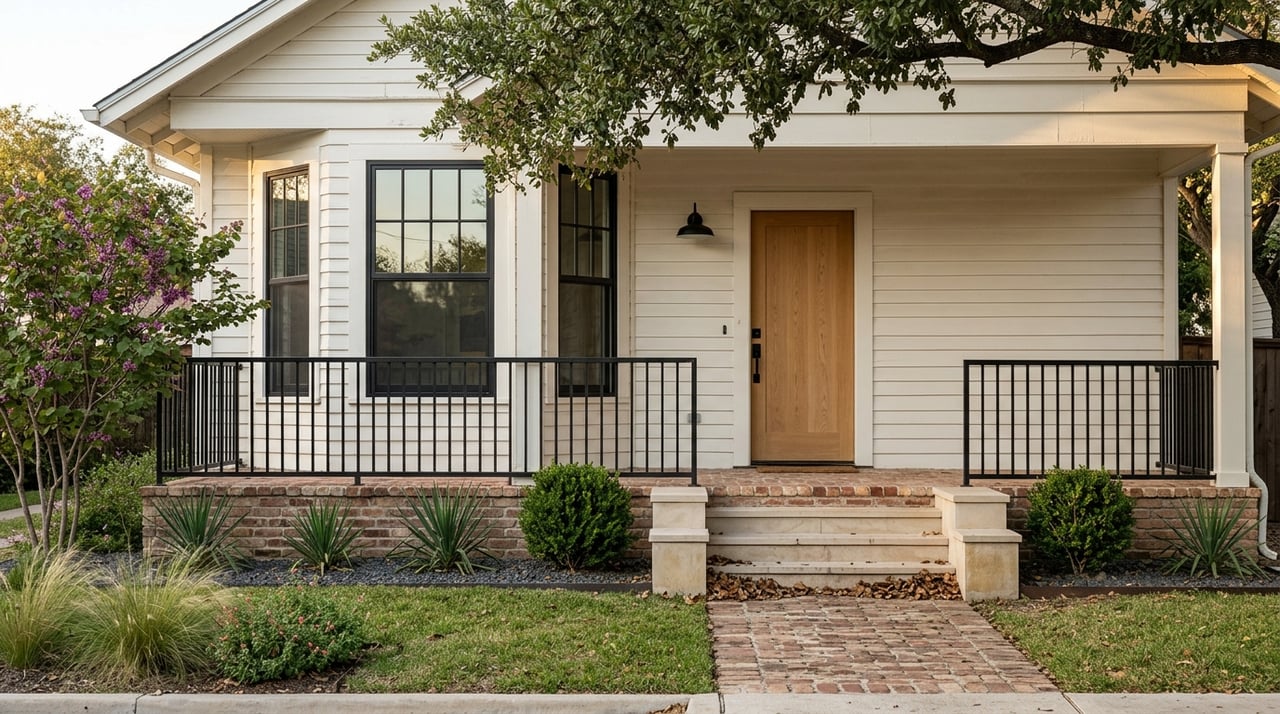
If you’re exploring Georgetown homes, there’s a good chance you’ve found yourself pulled in two completely different directions.
On one side, there are newer Georgetown communities with modern floorplans, pools, trails, amenity centers, and homes where everything still has that “new” feeling. On the other, there are historic and established neighborhoods closer to Downtown Georgetown, where mature trees, architecture, and proximity to the Square create an experience that feels rooted and distinctly local.
What makes this decision difficult is that buyers are rarely choosing between “better” and “worse.” They’re usually choosing between two very different lifestyles.
And honestly, most online articles oversimplify that conversation.
The reality is that this decision shapes far more than the home itself. It impacts your routines, maintenance expectations, flexibility, commute patterns, social environment, and even how connected you feel to the city over time.
If you’re deciding between a new construction home and a historic or established home in Georgetown, here’s things to consider.
Georgetown Has Grown Without Losing Its Identity
One reason Georgetown continues attracting buyers from Austin, Round Rock, Cedar Park, and beyond is because it offers two very different versions of Central Texas living within the same city.
You can live in a newer master-planned community with structured amenities and modern infrastructure, or you can live closer to Downtown Georgetown in areas shaped gradually over decades rather than built all at once. The City of Georgetown’s Downtown and Old Town planning information gives a good sense of how the city has balanced growth while preserving parts of its historic identity.
That contrast is part of Georgetown’s appeal.
The Downtown Georgetown Historic District has been part of the city’s preservation efforts for decades, with the City of Georgetown’s historic preservation program helping guide how historic areas evolve while maintaining their architectural identity.
And depending on what stage of life you’re in, either path can make complete sense.
New Construction in Georgetown Often Appeals to Buyers Looking for Simplicity and Predictability
Many Georgetown buyers initially gravitate toward new construction because it feels easier.
Newer systems. Fewer immediate repairs. Modern layouts. Builder warranties. Community amenities. More standardized processes.
Communities like Wolf Ranch, Nolina, Parkside on the River, Parmer Ranch, and Oaks at San Gabriel are designed around convenience and neighborhood infrastructure. Many include trails, pools, event lawns, parks, and shared gathering spaces. Buyers researching newer Georgetown communities can also explore the City of Georgetown’s development map and planning resources to better understand how different parts of the city are continuing to grow.
For some buyers, that kind of setup aligns better with how they want to live.
There’s also less uncertainty upfront. When touring newer homes, buyers can usually predict floorplans, finishes, lot configurations, and neighborhood aesthetics more easily than in older areas of Georgetown where homes vary significantly block by block.
But here’s the part that often gets overlooked:
New construction is not maintenance-free.
That misconception causes frustration for many buyers later.
While newer homes may reduce immediate repair risk, ownership still involves upkeep, warranty coordination, landscaping, seasonal maintenance, and occasionally navigating builder-related repairs or timelines. Builder warranties also have limitations, and coverage varies by builder and issue type.
The tradeoff is usually less about “maintenance versus no maintenance” and more about predictability versus variability.
Historic and Established Georgetown Homes Offer Something New Construction Usually Can’t Replicate
Walkability near the Square. Mature trees. Architectural variation. Streets that evolved organically over time instead of being engineered all at once. Local businesses woven into everyday routines. The ability to walk to coffee shops, restaurants, art events, or Georgetown’s recurring downtown festivals. The Downtown Georgetown events calendar offers a good look at the type of community events and activities that shape day-to-day life near the Square.
For many buyers, that experience feels more connected and personal.
And unlike many newer suburban developments, established Georgetown neighborhoods often feel less visually uniform. Homes may differ significantly in architecture, lot size, renovation level, and age.
That individuality can create a stronger emotional connection for certain buyers.
But older homes also require a different mindset.
Some properties may need system updates, insulation improvements, weather sealing, foundation evaluation, plumbing updates, or electrical modernization over time. Older homes can also be less energy efficient, depending on prior renovations and maintenance history.
That doesn’t make them a poor investment.
That doesn’t make them the wrong choice, it just means buyers should be prepared for a different kind of ownership experience.
Georgetown Neighborhoods Can Feel Very Different From One Another
One of the reasons Georgetown appeals to such a wide range of buyers is because the city doesn’t feel uniform.
Areas closer to Downtown Georgetown and Old Town Georgetown tend to feature more historic or established homes, mature landscaping, varied architecture, and stronger walkability to the Square and surrounding local businesses.
Communities like Wolf Ranch, Nolina, Parkside on the River, and Parmer Ranch tend to offer newer homes, more structured neighborhood planning, amenity centers, trails, and HOA-managed infrastructure.
And then there are neighborhoods that sit somewhere in between, offering established homes without historic overlays or newer construction without the scale of a large master-planned community.
For buyers relocating from Austin or surrounding areas, reviewing Georgetown’s official city maps and planning tools can help visualize how different parts of the city are laid out before narrowing down neighborhoods.
The Better Question Isn’t “Which Home Is Better?”
It’s:
“What kind of life do you actually want your home to support?”
That’s often where buyers start realizing which option actually fits their life better.
When buyers focus primarily on aesthetics, they often miss the functional side of daily living.
For example:
- Do you want your weekends centered around neighborhood amenities and newer recreational spaces?
- Or would you rather spend time walking downtown, visiting local businesses, and living closer to Georgetown’s civic core?
- Do you value consistency and newer infrastructure more?
- Or do you care more about uniqueness, character, and proximity to established parts of the city?
- Would HOA governance feel helpful or restrictive to you?
- Are you comfortable budgeting for future upgrades if you buy an older home?
These answers tend to reveal the better fit faster than comparing countertops or paint colors.
One Important Thing Buyers Overlook: Renovation Flexibility
This becomes especially important for buyers considering historic homes near Downtown Georgetown.
Depending on the property location and designation, exterior changes may require additional review through Georgetown’s historic preservation processes, including Certificates of Appropriateness for certain modifications. Buyers can review the City of Georgetown’s historic preservation guidelines before purchasing if renovations are part of the long-term plan.
That doesn't mean you can't renovate.
It simply means the process may involve more oversight than a home outside historic overlays or districts.
At the same time, newer HOA-governed communities may also have architectural controls, approval requirements, landscaping standards, and restrictions buyers should fully review before purchasing. Georgetown also maintains an official HOA community map that can help buyers verify whether a property falls within an association or overlay area.
Whether it’s HOA guidelines or historic preservation review, both paths come with things buyers should understand upfront.
Georgetown Buyers Are Increasingly Choosing Lifestyle Over Square Footage Alone
One shift we’ve noticed in the Georgetown market is that many buyers are becoming more intentional about how they want to live, not just what size home they want.
Some prioritize low-maintenance living and community amenities because they travel often or simply want fewer things to manage day to day.
Others prioritize location, walkability, and connection to established parts of the city because experience matters more to them than having the newest finishes.
That’s especially true for buyers relocating from Austin who want a slightly slower pace without feeling disconnected from Central Texas job centers, restaurants, and daily conveniences.
Neither approach is wrong.
But buyers who feel happiest with their decision long term are usually evaluating how the home fits into their everyday life, not just how the property looks.
That includes:
- Commute patterns
- Walkability
- Noise levels
- HOA structure
- Future maintenance expectations
- Community development patterns
- Accessibility to daily routines
- Long-term resale positioning
- Emotional fit
Those are often the things that end up affecting daily life the most after the excitement of buying their new home wears off.
A Practical Way to Compare Georgetown New Construction and Historic Homes
| Decision Factor | New Construction Homes | Historic or Established Homes |
|---|---|---|
| Lifestyle | Amenity-centered communities | Downtown-oriented, established feel |
| Home Systems | Typically newer | May require updates over time |
| Maintenance | More predictable upfront | Often more variable |
| Architecture | More standardized | More varied and distinctive |
| Renovation Rules | HOA/community guidelines | Potential historic review requirements |
| Walkability | Depends on community design | Often stronger near Downtown Georgetown |
| Neighborhood Feel | Planned and curated | Organic and evolved over time |
Questions Worth Asking Before You Buy
Before choosing between a new construction home and a historic Georgetown property, ask yourself:
- What kind of environment helps you feel most grounded day to day?
- How much flexibility do you want around renovations or personalization?
- Are amenities important to your routine?
- How comfortable are you with future maintenance projects?
- Do you want a neighborhood that feels newer and more structured, or more layered and established?
- How important is proximity to Downtown Georgetown?
- Are you prioritizing convenience, character, or a balance of both?
Those answers usually make the right fit feel a lot clearer than scrolling through listings does.
The Right Georgetown Home Is Usually the One That Fits Your Actual Life, Not Just Your Pinterest Board
One of the biggest mistakes buyers make is choosing a home based on an imagined future version of themselves instead of how they genuinely live right now.
The right home should support your routines, energy, priorities, and long-term goals, not fight against them.
For some buyers, that means newer Georgetown communities with trails, amenities, and simplified maintenance expectations.
For others, it means older neighborhoods with architectural character, walkability, and a stronger connection to Georgetown’s historic core.
At Dueñas Realty Group, we believe buying a home should feel informed, grounded, and aligned with the way you actually want to live, not pressured or transactional.
If you’re researching Georgetown before making a move, the City of Georgetown’s visitor and community information page can also help provide additional insight into local events, attractions, and the overall feel of different parts of the city while evaluating where you may want to live.
FAQs
Is Georgetown, Texas good for new construction homes?
Georgetown has several newer master-planned communities offering modern homes, amenities, trails, parks, pools, and HOA-managed common areas. Many buyers are drawn to the predictability and convenience newer communities can provide.
Are historic homes in Georgetown more expensive to maintain?
Historic and older homes can involve more ongoing maintenance, repairs, or system updates depending on the age and condition of the property. Buyers should budget thoughtfully for long-term upkeep and inspections.
What are the benefits of living near Downtown Georgetown?
Living near Downtown Georgetown may offer stronger walkability, access to restaurants and local businesses, architectural character, and proximity to community events and civic spaces.
Do historic homes in Georgetown have renovation restrictions?
Some Georgetown historic properties or homes within overlay districts may require review or approval for certain exterior modifications. Buyers should verify requirements with the City of Georgetown before planning renovations.
Are HOA fees common in Georgetown new construction communities?
Many newer Georgetown communities include HOA governance and dues that may cover amenities, maintenance of common areas, and neighborhood standards. Buyers should review HOA documents carefully during the contract period.
Disclaimer
This article is provided for informational purposes only and should not be considered legal, tax, financial, construction, zoning, or investment advice. Real estate regulations, HOA rules, historic district requirements, builder policies, and property conditions may change over time and vary by property. Buyers should independently verify all information and consult appropriate licensed professionals regarding their specific situation before making real estate decisions.