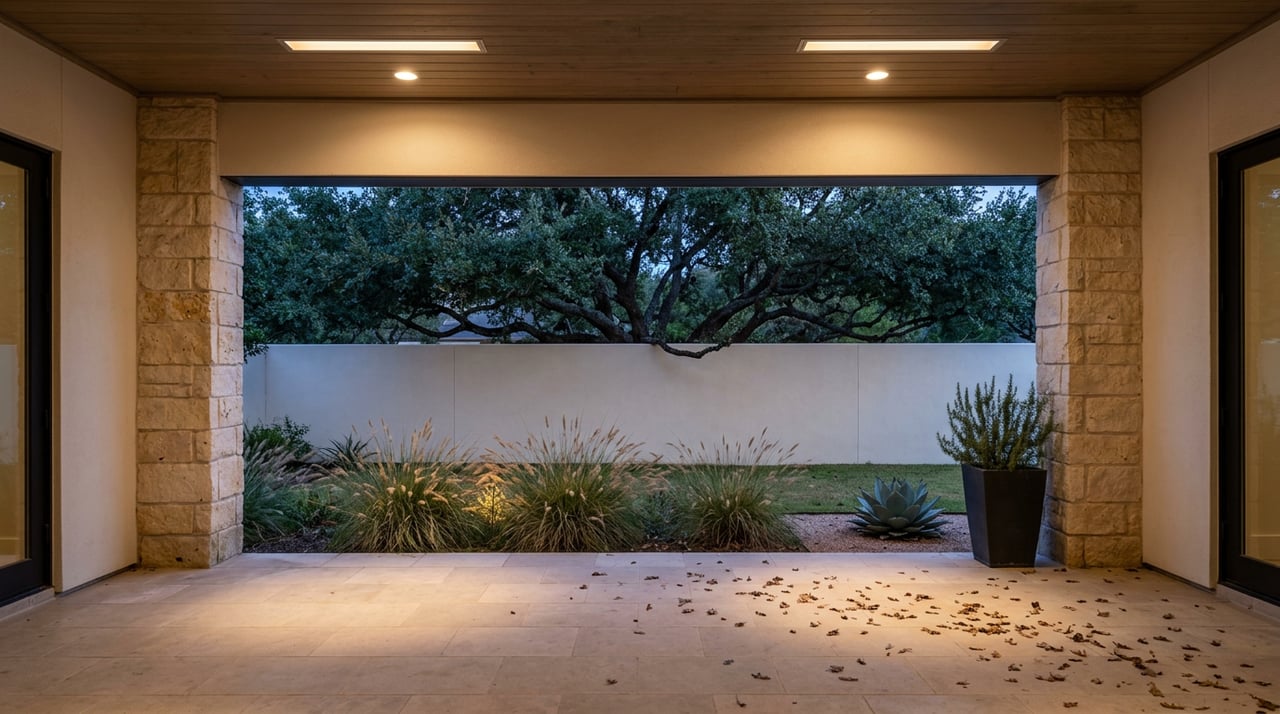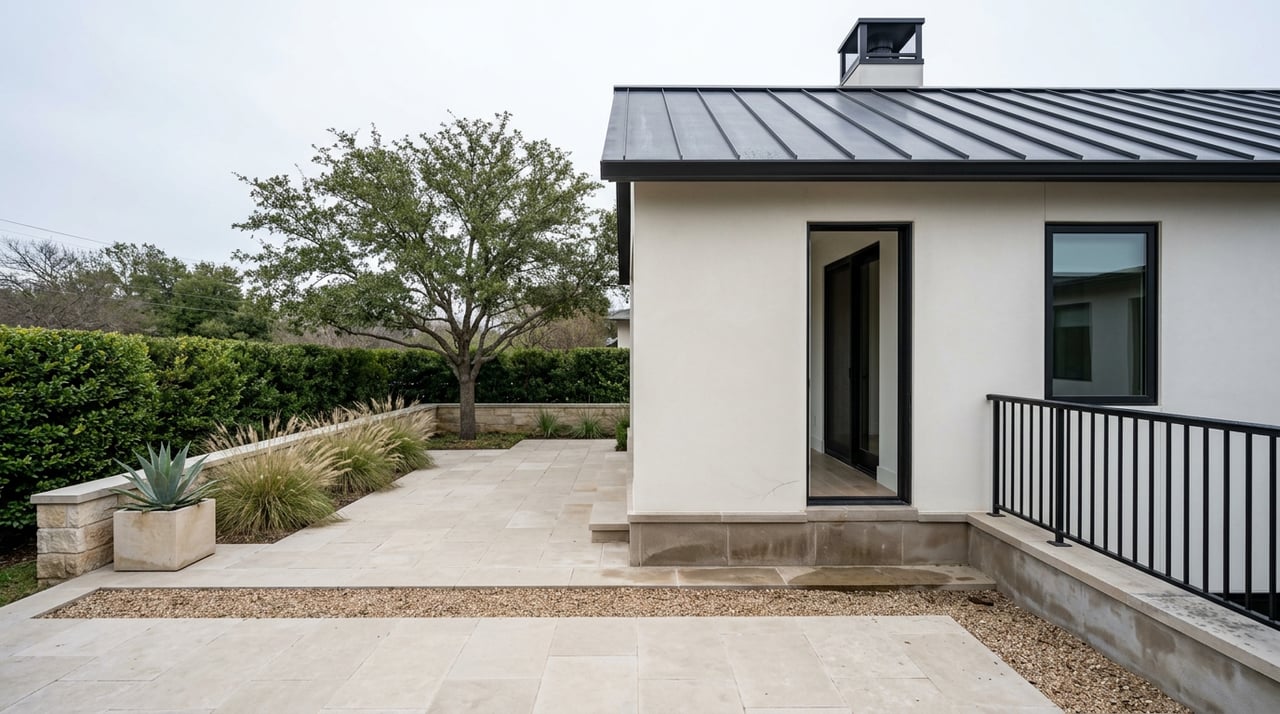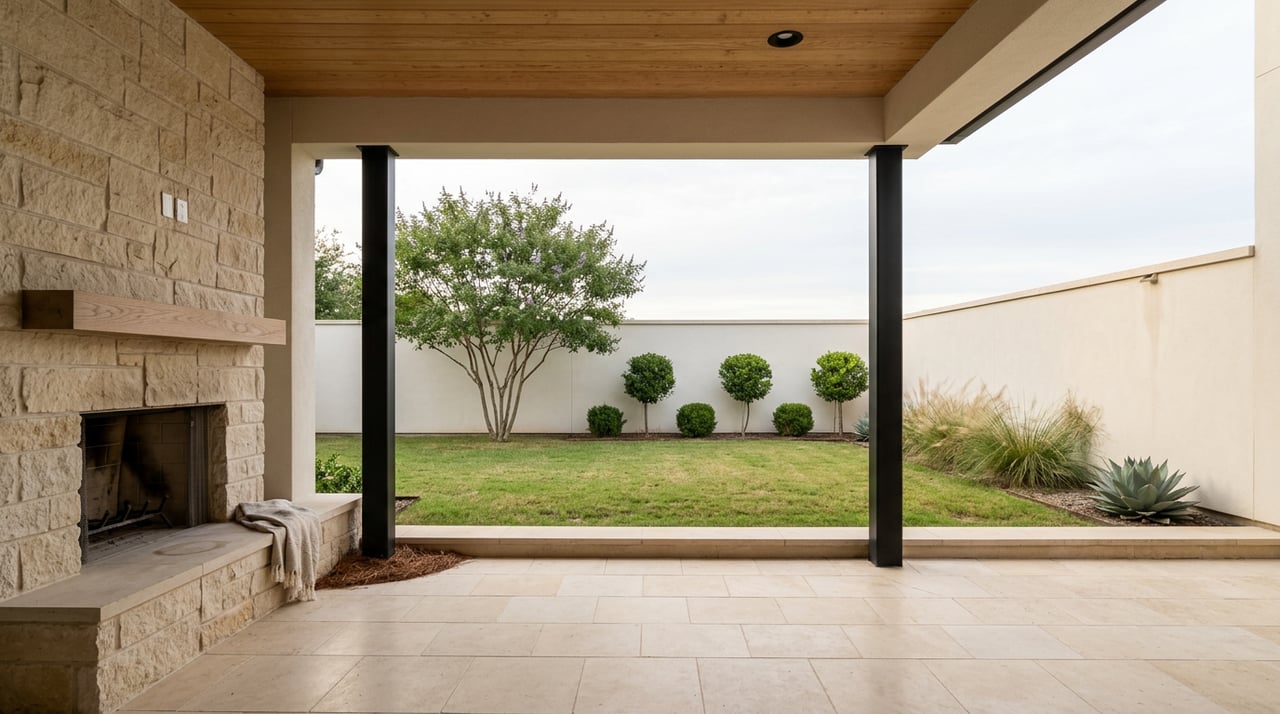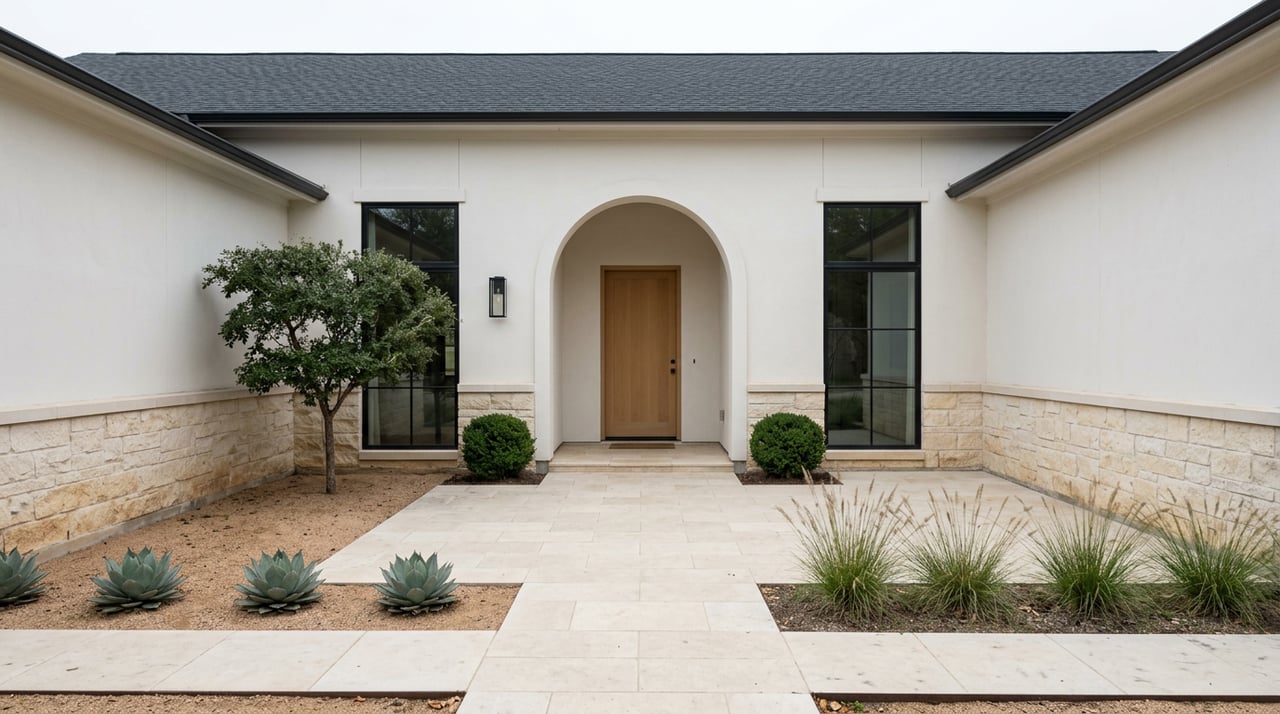
Picture two listings in Santa Rita Ranch, both priced right around $500,000, both roughly the same square footage, both built within the last two years. A buyer touring both back to back would have no reason to expect different math at closing. The floor plans rhyme. The finishes rhyme. The HOA newsletter probably mentions the same food truck nights.
Then the title company sends over the tax estimate, and the two numbers stop rhyming. One buyer is looking at a combined rate a little above 2.2%. The other is looking at something closer to 2.55%. On a $500,000 assessed value, that gap works out to roughly $1,700 a year, or about $140 a month, and neither buyer saw it coming because neither buyer thought to ask which section of Santa Rita Ranch they were actually standing in.
The Median Price You Saw Isn't Buying What You Think
Every portal search for Liberty Hill returns one number: a citywide median. That number is real, but it blends together a downtown lot with no MUD attached to it at all and a brand-new phase inside a master-planned community still issuing bonds to build its own water and sewer lines. Averaging those two situations together tells you almost nothing about what your specific address will owe.
The variable that matters is whether the property sits inside a Municipal Utility District, and if so, how far along that district is in paying down the debt it took on to build the neighborhood's infrastructure. A MUD is a separate taxing entity that funds water, sewer, and drainage for a new development by selling bonds, then collects an annual tax to repay them. As the bonds get paid off, the rate is supposed to come down. Established, non-MUD sections of Liberty Hill run an effective rate closer to 1.72%. Sections still carrying the heaviest bond load run well above that.
Why One Line Item Can Move $140 To $350 A Month
Santa Rita Ranch is the clearest example because its rate history is public and it spans several tax years. The community's combined rate, covering county, school district, emergency services district, and MUD taxes together, has moved like this:
| Tax Year | Combined Rate (per $100 valuation) |
|---|---|
| 2021 | 2.7048% |
| 2022 | 2.6373% |
| 2023 | 2.2571% |
| 2024 | 2.3793% |
| 2025 | 2.2171% |
That is not a straight line down. It fell hard through 2023, ticked back up in 2024, then eased again in 2025. Bond schedules and refinancing decisions move the number around year to year, so nobody should assume the rate only goes one direction.
Meanwhile, a builder disclosure for a newer phase inside the same community lists an approximate 2026 combined rate of $2.554771 per $100, broken out as roughly 1.24% for Liberty Hill ISD, 0.37% for Williamson County, 0.07% for the county's emergency services district, 0.04% for county farm-to-market roads, and 0.83% for Williamson County MUD #19B. That newer section sits well above the community-wide 2025 average, because a newer phase is still early in its own bond repayment, separate from the phases that came before it.
Run the same $500,000 assessed value through both ends of that spread. At the established, non-MUD 1.72% baseline, the annual tax bill lands around $8,600. At Santa Rita Ranch's 2025 community-wide rate, it's closer to $11,085. At the newest phase's 2026 rate, it's closer to $12,774. That's a swing of nearly $350 a month in property tax alone, on identically priced homes, depending entirely on which section and which phase.
Same Community Name, Different Products
Santa Rita Ranch also isn't zoned to one school district. Sections called Homestead and Saddleback are zoned to Liberty Hill ISD. A section called Tierra Rosa is zoned to Georgetown ISD instead, even though it carries the same community name and the same HOA. Buyers comparing two Santa Rita Ranch addresses can end up comparing two different school districts without realizing it.
The utility picture splits the same way. Some sections rely on water and wastewater delivered through local MUDs. That same 2026 builder disclosure for the community's newest phase lists Georgetown Utility System, not a MUD, as the water and sewer provider for that specific section, even though the MUD tax line still appears on the same tax bill. The MUD can be funding the infrastructure while a different entity handles the retail utility service. That distinction rarely comes up in a listing description, and it matters for anyone trying to estimate a monthly utility bill from a sample size of one neighbor.
HOA dues follow the same pattern. One published range for Santa Rita Ranch runs $116 to $198 a month. A separate builder disclosure for a different section, dated to early 2024, listed $285 per quarter, which works out closer to $95 a month. Both figures are accurate for their specific section and point in time. Neither one describes the whole community today.
The Assessment You Won't See Until Late In The Contract
Texas law requires a specific notice before a buyer signs a contract on a property inside a MUD, not just before closing. Santa Rita Ranch's own community guidance confirms the seller is responsible for completing and delivering that MUD notice form before the sales contract is signed. If that notice arrives late, it can affect the buyer's rights under the contract.
A property inside a Public Improvement District carries its own separate disclosure requirement. Since September 1, 2021, Texas Property Code Section 5.014 has required sellers to deliver a specific addendum disclosing the obligation to pay into the district before the buyer signs.
Liberty Hill didn't adopt its first formal PID policy until January 2023, according to the city's own planning FAQ, so this is a newer layer for the area. It means future developments in Liberty Hill could end up stacking a PID assessment on top of a MUD tax, which would widen the gap between an established neighborhood and a brand-new phase even further than what today's numbers show.
Five Questions Worth Asking Before You Write An Offer
- What is the current combined tax rate for this specific section, not the community as a whole?
- Is the property inside a MUD, a PID, or both, and has the notice been delivered yet?
- Which elementary, middle, and high school is this exact address zoned to, especially in communities that span more than one district?
- Which entity actually delivers water and sewer service to this address, and is that the same entity collecting the MUD tax?
- Is the HOA fee billed monthly or quarterly, and does that match the figure you were quoted?
None of these questions show up on a standard listing sheet. They show up in the MUD notice, the builder's community disclosure, or a direct call to the appraisal district, which is why they're worth asking before an offer goes in rather than after.
A Few Questions We Hear Often
Does the MUD tax ever go away? It's designed to. MUD taxes are meant to decrease or disappear once the district's bonds are fully repaid, though the timeline isn't fixed and depends on how the district manages its debt.
Is every neighborhood in Liberty Hill inside a MUD? No. Older sections of the city, including much of the historic core, are taxed through the standard city, county, and school district rates without an added MUD or PID line. The MUD structure mainly applies to newer master-planned communities like Santa Rita Ranch, where the developer needed a way to fund water, sewer, and drainage infrastructure from scratch.
Does a lower MUD rate always mean an older section? Usually, but not always. A rate can tick up in a given year if a district refinances or issues new bonds for a later phase, so the direction of the number should be checked for the specific tax year, not assumed.
If you're comparing homes across Liberty Hill's master-planned communities and the tax math feels harder to pin down than it should, that's the actual shape of this market right now, not a gap in your research. Dueñas Realty Group works these numbers by section and by phase before a client ever writes an offer. Start Your Move — Get a Free Consultation & Home Valuation.